
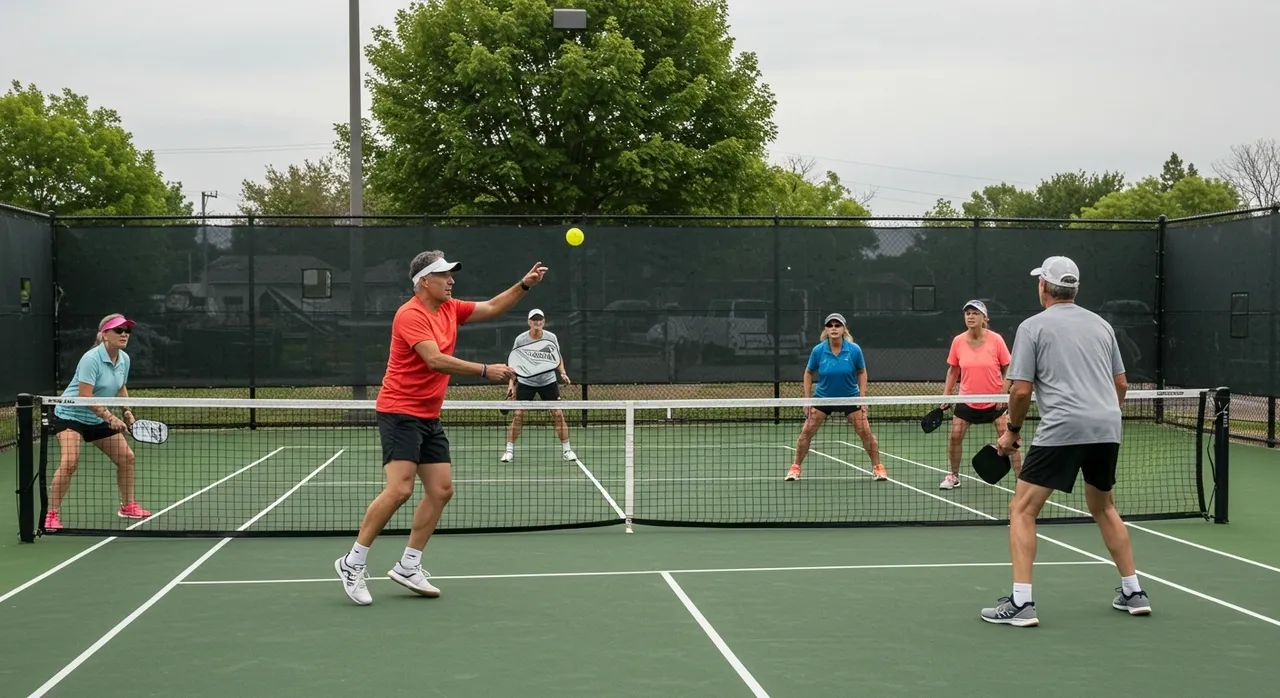
Here are 10 powerful strategies and technical tips that can help you dominate the court and outsmart your opponents.
1. Master the Third Shot Drop
The third shot drop is one of the most essential skills in advanced pickleball play. It’s a soft shot played from the baseline that lands in your opponent’s kitchen (non-volley zone), giving you time to approach the net.
Practice this shot consistently—it’s the key to controlling the pace of the game and neutralizing aggressive players.
2. Learn to Reset Under Pressure
Resetting the ball means taking a fast-paced or aggressive shot and turning it into a softer, more neutral one. When your opponent is smashing balls at you, use a calm, controlled paddle angle to reset the ball into the kitchen.
This technique reduces unforced errors and turns defense into opportunity.
3. Use the “Shake and Bake” Strategically
The “Shake and Bake” is an advanced doubles tactic where one player hits a driving third shot while the partner crashes the net, ready to poach the return. Timing and communication are everything.
It’s a great weapon when executed well but should be used selectively.
4. Disguise Your Shots
At the intermediate level, predictability can cost you points. Work on disguising your drop shots, drives, and lobs. Use body language and paddle positioning to keep your opponents guessing.
A disguised dink that suddenly turns into a lob can catch your opponents completely off guard.
5. Perfect Your Dinking Technique
At this level, dinking isn’t just about keeping the ball low—it’s about moving your opponent around the kitchen. Use cross-court dinks, angles, and spins to open up space and force errors.
Control and placement are more important than power here.
6. Add Topspin to Your Groundstrokes
Topspin helps your shots dip quickly, making it harder for your opponent to attack them. It also helps in keeping drives inbounds when hitting at sharper angles or with more power.
Practice your topspin technique during drills or pickleball classes that focus on stroke mechanics and advanced rally play.
7. Use Lobs as an Offensive Tool
Many intermediate players use the lob only when they’re in trouble—but a well-placed offensive lob can be a powerful surprise tactic.
Target it over the backhand shoulder of your opponent, ideally when they’re leaning forward or hugging the kitchen line.
8. Improve Your Footwork
Quick footwork allows you to maintain proper positioning, react faster, and reduce fatigue. Focus on small, balanced steps and always return to a neutral ready position after each shot.
Consider adding agility ladders or cone drills to your off-court training.
9. Dominate the Kitchen Line
The kitchen is where most points are won. Develop confidence in taking balls out of the air (volleys) and holding your position at the non-volley zone. Stay light on your feet, keep your paddle up, and be ready to pounce.
Controlling the net puts pressure on your opponents and opens up attack opportunities.
10. Take Targeted Lessons to Refine Technique
Sometimes, a fresh set of expert eyes can pinpoint the gaps in your game and accelerate your progress. While private pickleball lessons are great for personalized feedback, small group sessions also offer the chance to play against others at your level.
Find an instructor who understands your goals and can help you build a solid game plan based on your strengths.
Final Rally: Progress Starts with Precision
Being an intermediate player is exciting—it means you’ve mastered the foundation, and now it’s time to sharpen your competitive edge. Incorporating these 10 techniques into your training routine will not only elevate your gameplay but also boost your confidence on the court.
Remember, progress doesn’t come from just playing more—it comes from practicing smart. Mix these advanced techniques with intentional drills, match play, and occasional instruction to stay sharp and keep climbing the skill ladder.