
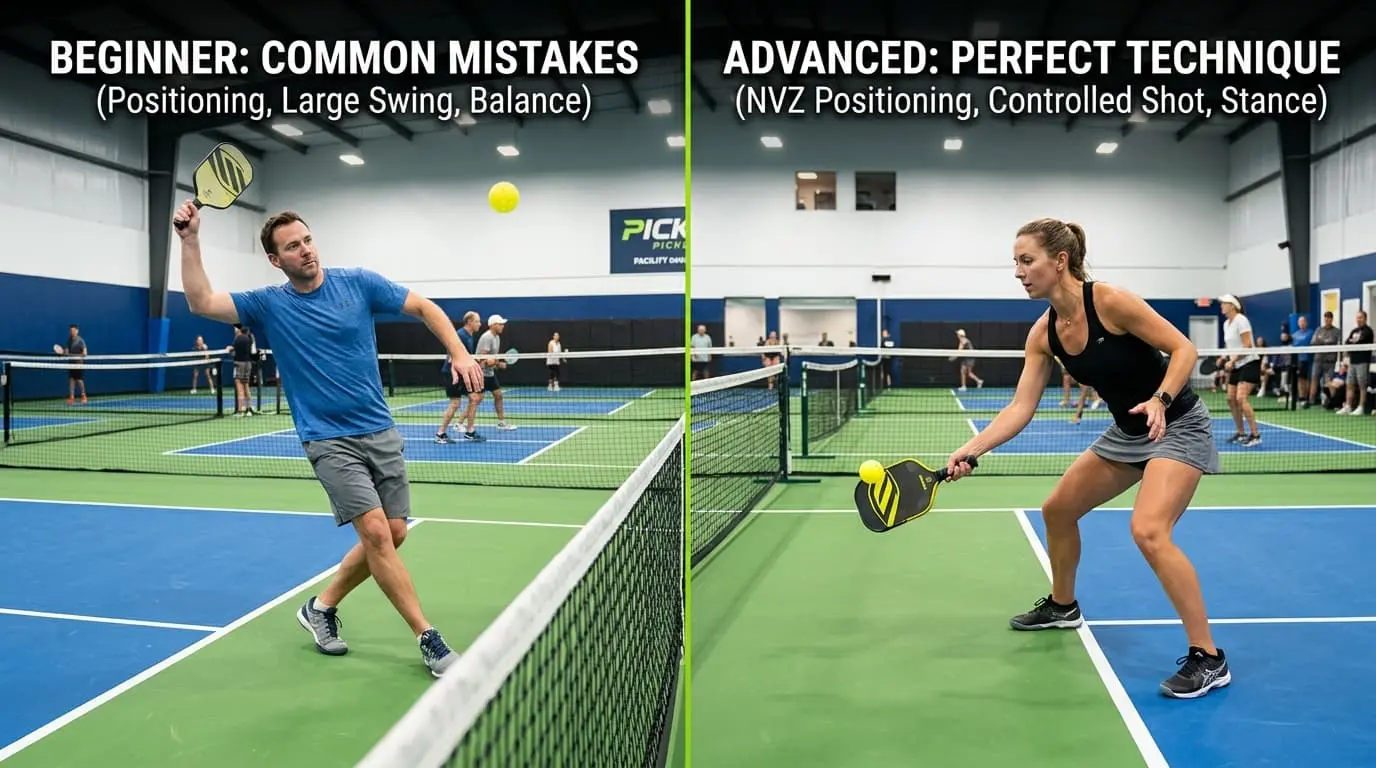
Master the Mindset, Movement & Mechanics to Level Up
The Skill Gap: It’s More Than Just Experience
If you’ve ever played against a high-level pickleball player, you’ve likely noticed that the game feels different. They move smarter, hit cleaner, and seem to anticipate your every shot. So what really separates a beginner from an advanced player?
It’s not just practice hours—it’s strategy. This guide dives into the tactical and mental shifts that take you from casual player to serious competitor. Whether you’re just starting out or looking to elevate your game, understanding where you stand can make all the difference.
Strategy Starts With Mindset
Beginner Mindset:
Beginners often focus on just getting the ball over the net. Their play is reactive, not proactive, and they rely heavily on power to win rallies. Confidence may fluctuate with every point.
Advanced Mindset:
Advanced players see every point as a chess move. They control tempo, look for patterns in opponents’ play, and remain mentally composed—even when they’re behind. Winning isn’t about hitting hard, but about playing smart.
🗝️ Pro Tip: Focus on consistency before complexity. You can’t play mind games if you’re still double-faulting serves.
Court Movement & Positioning
Beginners:
- Tend to hug the baseline longer than needed
- Often move late or stay flat-footed
- Don’t fully understand the value of the “kitchen line” (non-volley zone)
Advanced Players:
- Rush the kitchen line as soon as possible to dominate net play
- Use “split steps” to stay agile and anticipate shots
- Cover angles with purposeful positioning, not just hustle
Positioning is foundational. Want to train like the pros? Book pickleball court time specifically to work on movement and footwork drills—it’s often the least glamorous yet most transformative part of your game.
Shot Selection & Control
Beginners:
- Rely heavily on slams or lob returns
- Often struggle with soft shots like dinks or drop serves
- Don’t understand when to reset the rally versus attack
Advanced Players:
- Master the art of controlled dinks and resets at the net
- Mix up shot speed, spin, and direction deliberately
- Use third-shot drops to transition safely to the net
The game isn’t always about force. In fact, the best players win more with soft hands than hard slams.
🎯 Game-Changer: Learn the third-shot drop. It’s arguably the single biggest jump in strategy from beginner to intermediate play.
Targeting & Reading Opponents
Beginners:
- Hit to wherever they can
- Don’t adjust based on their opponents’ weaknesses
- Rarely look ahead to anticipate ball direction
Advanced Players:
- Exploit gaps between players in doubles
- Target backhands, weaker players, or force awkward court positions
- Read body language and paddle angle to predict shots
This level of play comes with time, but watching matches—even as a spectator during pickleball social events—can sharpen your court vision dramatically.
Communication & Team Play in Doubles
Beginners:
- Sometimes get tangled with their partner
- Miss shots due to unclear roles or poor communication
- Don’t always call “yours” or “mine” effectively
Advanced Players:
- Use constant low-key communication (hand signals, quick calls)
- Have pre-agreed strategies like stacking or switching sides on serve
- Cover each other’s weaknesses intuitively
If you’re playing doubles, team chemistry and communication are just as important as individual skill.
Practice Habits That Make the Difference
Let’s be honest: most beginners practice by just… playing. But advanced players train with intention.
- Beginners:
- Join casual drop-in games
- Practice inconsistently and rarely focus on weaknesses
- Prioritize fun over form (which is totally fine early on!)
- Advanced:
- Train with drills for specific skills (drops, dinks, serve placement)
- Watch game footage for self-analysis
- Work with a coach or mentor and track progress
If you want to transition from casual to competitive, shift some of your game time toward focused practice. You’ll see results faster than you think.
Final Thoughts: Where Do You Stand?
So… how does your game stack up?
If you’re still hugging the baseline, slamming every return, and unsure when to rush the net, you’re in the early stages—and that’s okay. Pickleball is one of the most accessible sports to learn, and progression happens fast with the right focus.
If you’re mixing up shots, dominating net play, and reading your opponents like a book—you’re on your way to elite status.
The beauty of pickleball lies in its approachability and depth. Whether you’re playing in your first tournament or mingling at pickleball social events, strategy is always in play—even when the stakes are low.
Ready to Level Up?
Start tracking your game, identify one strategy to master each month, and—most importantly—book pickleball court time with intention. Mastery begins with movement, mindset, and match experience.
Let your game speak.