
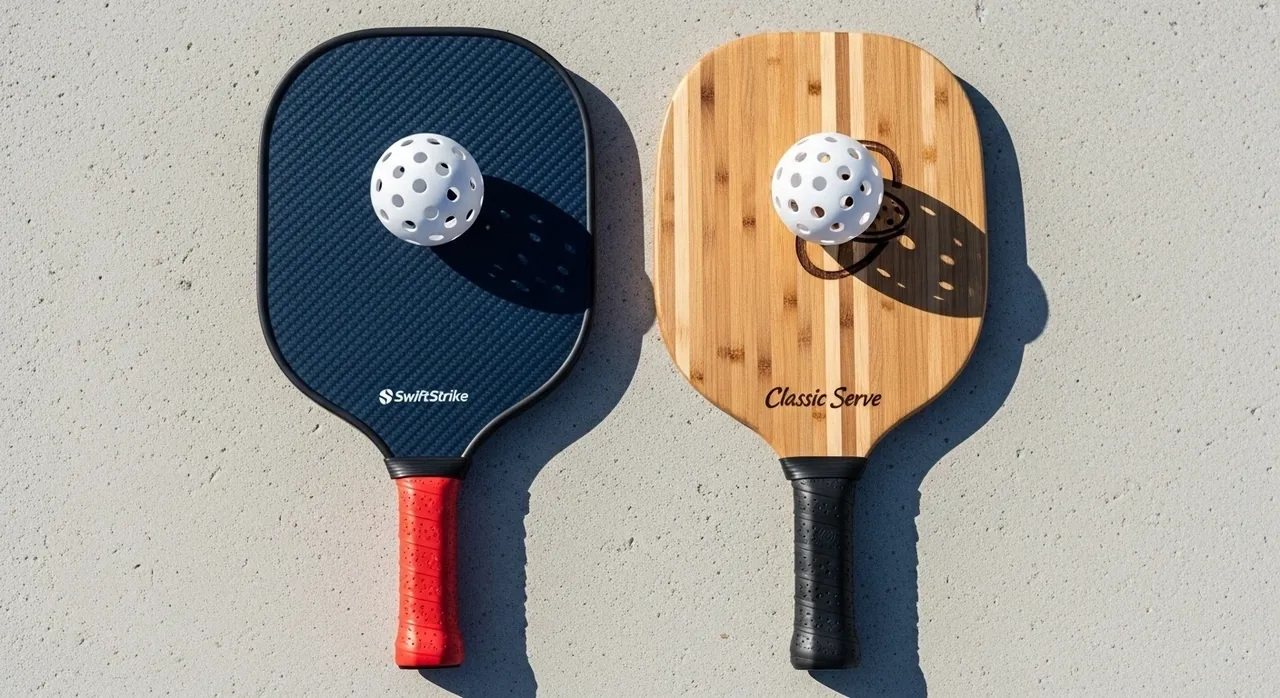
“Should I go with a wooden paddle or a composite one?”
The right paddle can elevate your game, enhance control, and even reduce fatigue or injury. In this post, we’ll break down the key differences between wooden and composite pickleball paddles, including pros, cons, and tips to help you choose the best one for your playing style.
What Are Wooden Pickleball Paddles?
Wooden paddles are the original paddle type — the OG of pickleball gear. They’ve been around since the game was invented and are still used today for one main reason: affordability.
They tend to be heavier, ranging from 9 to 12 ounces, and are made from hardwood materials. While not high-tech, they’re durable and great for casual use.
Pros:
- Budget-friendly: Ideal for beginners or large groups
- Durable: Withstand rough play and harsh outdoor conditions
- Powerful: The heavier weight adds force to each hit
Cons:
- Fatigue: Heavier weight can cause wrist or shoulder discomfort
- Lack of finesse: Tougher to control for soft shots and spins
- Limited features: Basic grips and no edge guards
Wood paddles are best for first-time players trying the sport or those who just want something simple and tough.
What Are Composite Pickleball Paddles?
Composite paddles are the modern, upgraded alternative. Made from materials like fiberglass, carbon fiber, or graphite, they feature a core often made of polymer, Nomex, or aluminum.
They’re lightweight, responsive, and packed with tech that improves spin, control, and comfort.
Pros:
- Lightweight: Typically 6.5–8.5 ounces for quicker reactions
- Excellent control: Ideal for touch shots like dinks and drops
- Customizable: Come in various shapes, grip sizes, and surface textures
- Quieter: Popular for indoor facilities where sound matters
Cons:
- More expensive: Can range from $60 to over $200
- Less rugged: Surface may wear faster over time
Composite paddles are great for those looking to invest in their game and take it beyond the basics.
So, Which Paddle Is Right for You?
Here’s how to decide based on your current situation and goals:
You’re a Total Beginner
If you’re just trying out pickleball for fun and want to keep costs low, a wooden paddle will do the job. However, if you plan to play regularly, it’s worth jumping straight to an entry-level composite paddle for better control and comfort.
You Want More Control and Precision
Composite paddles win hands down. Their lighter weight and textured surface give you the finesse needed for dinking, volleying, and spin shots.
You Prefer Power and Durability
Wood paddles are naturally heavier and tougher, making them ideal for players who rely on hard drives and want something that lasts, even if dropped or tossed around.
What Do the Pros Use?
Most competitive players use composite or graphite paddles. These paddles offer a balance of power, control, and maneuverability — all essential for advanced play. If you’re entering tournaments or want to take your game to the next level, composite is the way to go.
But don’t worry if you’re not there yet. Even the pros started somewhere — often with something as simple as a wood paddle.
Paddle Tips for Every Level
- Check grip size: An improperly sized grip can strain your hand and affect your shots.
- Mind the weight: Lighter paddles help with speed and reaction time; heavier paddles give you more drive.
- Try before you buy: Whether from friends, clubs, or a rental program, test different paddles before committing.
It’s Not Just About the Paddle
While the paddle can definitely affect your performance, it’s your technique, consistency, and strategy that will ultimately determine your success on the court.
A good paddle enhances your game. But consistent play, practice, and a willingness to learn will help you improve more than any gear ever will.
That’s why it’s worth taking the time to explore your options. Try a wooden paddle if you’re new or on a budget. Go for a composite paddle if you’re ready to step up your game and want more control.
Either way, just keep playing.
Final Thoughts
Choosing between wooden and composite pickleball paddles depends on your goals, budget, and playing style. If you’re still figuring it out, pickleball paddle rentals are a great way to experiment before making a purchase.
And remember — your skills improve through experience. So get out there, practice regularly, and consider joining local pickleball leagues to push your game to the next level.
Whether you swing wood or composite, the best paddle is the one that keeps you playing, learning, and loving the game.