
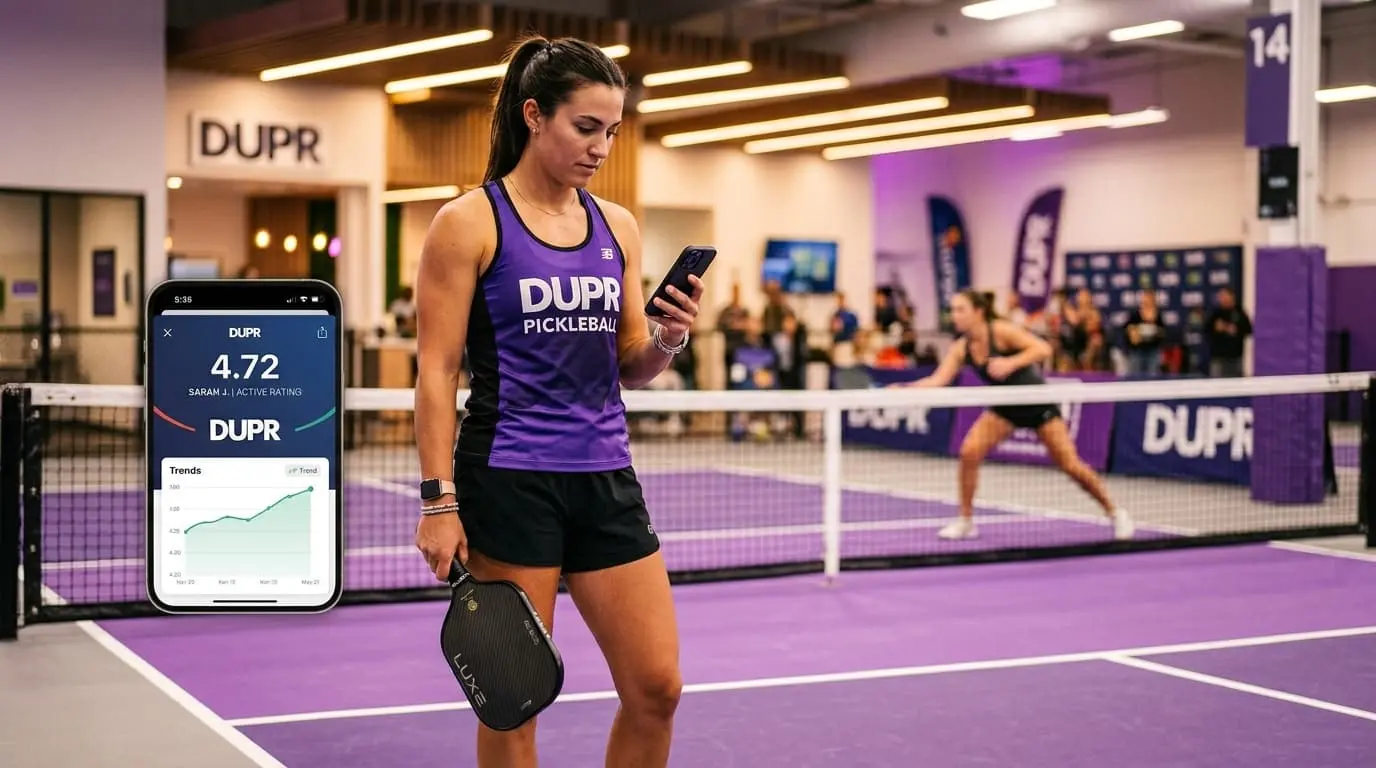
You showed up. You played hard. You may have gotten a little addicted. And somewhere along the way, someone mentioned your DUPR rating and suddenly the numbers started to matter.
If you’re nodding right now, you’re not alone. Across courts in Oakville and all the way through the Greater Toronto Area, players are waking up to the fact that their DUPR score is far more than a badge of honour. Used correctly, it becomes the single most powerful tool you have for setting goals that are ambitious and actually achievable in 2026.
Let’s break it down honestly, practically, and without the fluff.
What Your DUPR Rating Is Actually Telling You
DUPR (Dynamic Universal Pickleball Rating) is a globally recognized, algorithm-driven rating system that calculates your skill level based on match results, margin of victory, and the strength of the opponents you’ve faced. Unlike self-reported ratings, DUPR doesn’t care how confident you feel walking onto the court. It’s a reflection of performance, pure and simple.
Your score runs from 2.0 (absolute beginner) to 8.0 (elite professional). Most recreational club players fall somewhere between 3.0 and 4.5. What separates these bands isn’t just athletic ability, it’s court awareness, shot selection, communication with your partner, and the mental composure to execute under pressure.
Here’s the key insight most players miss: your DUPR rating is a snapshot, not a sentence. It tells you where you are today, not where you’ll be by December.
Why 2026 Is the Year to Take Your Rating Seriously
Pickleball in Canada is no longer a backyard pastime. With national governing bodies, DUPR-integrated league systems, and purpose-built indoor facilities now tracking match data in real time, your rating follows you everywhere you play. Club events, open tournaments, challenge nights results feed directly into your score.
That means every session you play in 2026 is an opportunity to either build your rating intentionally or let it drift by accident. Players who understand this are already ahead.
Understanding pickleball scoring formats whether you’re playing rally scoring or traditional side-out also directly impacts how you approach competitive match play and how those results register in your DUPR profile. Knowing the format before you step on the court is no longer optional; it’s part of playing smart.
How to Set Goals That Actually Match Your Current Rating
This is where most players go wrong. They set a vague goal “I want to get better” and then wonder why six months later they feel stuck.
DUPR gives you precision. Use it.
If you’re currently rated 2.5–3.0, your goal for 2026 should centre on consistency, not power. Focus on keeping your unforced errors below five per game, mastering the kitchen line, and developing a reliable third-shot drop. A realistic target: move to 3.2 by mid-year.
At 3.0–3.5, you’re beginning to understand court geometry and partner positioning. Your 2026 goal should involve intentional drilling not just playing and entering at least two rated events to test your game under real pressure. Work toward 3.6 or 3.75.
Between 3.5 and 4.0, the game gets genuinely tactical. At this level, upgrading your pickleball strategy means shifting from reactive play to dictating points. Study reset mechanics, learn to identify your opponent’s weaker side within the first two rallies, and start tracking your win percentage in league play. Aiming for 4.2 by year-end is realistic with structured improvement.
Above 4.0, your goals need to be match-specific. Work with a coach on video analysis, enter DUPR-rated open events, and use challenge nights to stress-test your game against unfamiliar opponents.
The Role Your Training Environment Plays
Here’s something the algorithm doesn’t measure but your rating absolutely reflects: who and where you train.
Playing up regularly competing against people rated 0.3 to 0.5 above you is the fastest way to accelerate your DUPR growth. But that only works if your facility gives you consistent access to those players, structured events where results are tracked, and coaching resources to turn losses into lessons.
Finding the best pickleball club for your development means looking beyond nice courts. It means asking whether the community challenges you, whether skill-matched events are organized regularly, and whether coaches are available to help you close the gap between where you are and where your goals say you should be.
Turning Your Rating Into a 12-Month Roadmap
Goal-setting without a timeline is just wishful thinking. Here’s a simple framework:
- January–March: Establish your baseline DUPR with at least 4–6 rated matches. Identify your two biggest technical weaknesses.
- April–June: Enrol in a skills clinic targeted to your level. Play at least one tournament to stress-test progress.
- July–September: Mid-year review. Has your rating moved? Adjust your training focus accordingly.
- October–December: Compete in a league. Use team play to build on the individual skills you’ve developed all year.
The Honest Truth About Ratings and Progress
DUPR growth is never linear. You’ll have weeks where everything clicks and weeks where you question whether you’ve improved at all. That’s not failure, that’s pickleball.
What separates the players who genuinely level up from those who plateau is simple: they play with intention. They know their number, they know what it means, and they show up every week with a specific focus in mind.
Your rating is a starting point. Your goals are the direction. And 2026 is a long court with a lot of room to run.
See you on the kitchen line.
Ready to put your DUPR goals into action? Book a court, join a league, or register for a clinic at PickleX Oakville’s home for year-round competitive and community pickleball.