
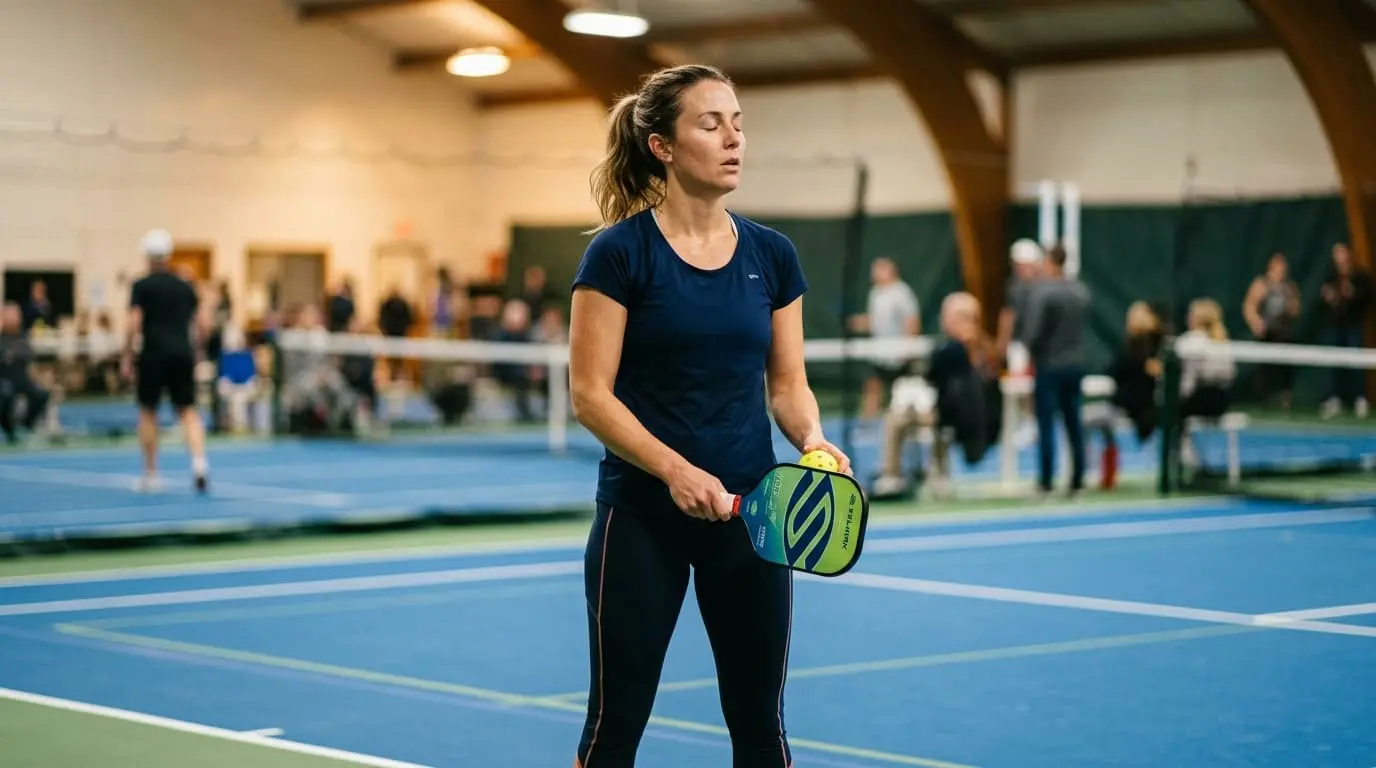
Every pickleball player knows the feeling. The first serve goes up, your heart is racing a little, and before you’ve even settled in, you’re suddenly down 4–0 and scrambling to catch up. The truth is that matches are often shaped in the opening minutes long before the score gets close. How you handle those first few points sets the tone for everything that follows.
The good news? Taking control early isn’t about being the most talented player on the court. It’s about having a smart pre-game routine, reading the situation quickly, and making a few deliberate choices. Here’s how to use the first five minutes to put yourself in the driver’s seat.
Warm Up With a Purpose, Not Just to Loosen Up
Most players treat the warm-up as a formality a few lazy dinks and a couple of overheads before the “real” game starts. That’s a missed opportunity. Your warm-up is the first chance to gather information.
As you trade shots, pay attention. Does your opponent’s backhand look shaky? Are their drops floating high? Can they handle pace, or do they flinch at a hard drive? You’re not just warming up your own muscles you’re quietly scouting. A purposeful warm-up routine gets your body ready and hands you a quick read on who you’re facing before the first point is even played.
Settle Your Nerves Before the First Serve
The mental game in pickleball is real, and early jitters cause more unforced errors than any opponent ever will. If you rush, you’ll spray serves and overhit returns.
Take a breath. Slow your pace between points. A simple pre-serve routine bounce the ball twice, take one deep breath, then serve gives your mind something steady to hold onto. Calm, controlled players make cleaner contact, and clean contact early builds the kind of confidence that carries through a whole match.
Start With High-Percentage, Low-Risk Shots
The temptation in the opening minutes is to come out swinging and “send a message.” Resist it. The fastest way to hand momentum to your opponents is to gift them three or four free points with reckless shots.
Instead, lean on consistency first. Get your serve deep and in. Keep your returns deep to push the serving team back. Use a reliable third shot drop or a safe drive rather than going for a winner you haven’t found your rhythm for yet. Forcing your opponents to earn every point puts immediate pressure on them and pressure creates mistakes.
Win the Race to the Kitchen Line
So much of pickleball strategy comes down to court positioning, and the team that controls the non-volley zone usually controls the rally. In those first few points, make it a priority to get up to the kitchen line and establish your position there.
If you and your partner are both planted at the line, hitting controlled dinks and resets, you’ve taken away your opponents’ attacking angles. Players who hang back at the baseline are constantly on the defensive. Getting forward early and staying patient once you’re there is one of the simplest ways to seize control of the game.
Read Your Opponents and Target the Weaker Side
By the end of the first few rallies, you should have a working answer to one key question: which opponent is the weaker link, and where is their weakness?
Maybe one player has a fragile backhand. Maybe one struggles to move side to side. Maybe one gets impatient and goes for low-percentage shots when the dink rally drags on. Once you spot it, direct your shots there. Smart shot selection in the opening minutes forces the weaker player to repeatedly make tough plays, and it builds an early lead that’s hard for them to claw back.
Communicate Early With Your Partner
In doubles, the first few points are also when you and your partner sync up. A quick word between points “I’ll take the middle,” “switch on the lob,” “your serve was great, keep it deep” keeps you both on the same page and builds momentum as a unit.
Teams that communicate early avoid the awkward “yours/mine” collisions that gift away cheap points. Even simple encouragement matters; a partner who feels supported plays looser and more confidently from the very first rally.
Set the Tempo You Want to Play At
Finally, decide what kind of match you want this to be and impose it. If you’re a patient, soft-game player, slow things down with extended dink rallies and resets. If you thrive on pace, look for early opportunities to drive and speed up the ball. Dictating the tempo in the opening minutes forces your opponents to play your game instead of theirs.
The Takeaway
Taking control of a pickleball match in the first five minutes isn’t about hitting harder or being flashier. It’s about playing smart from the start: warming up with intention, calming your nerves, choosing high-percentage shots, getting to the kitchen line, reading your opponents, and communicating with your partner.
Do those things consistently, and you’ll find yourself ahead before your opponents have even figured out what’s happening and staying ahead is always easier than chasing.
Want to put these habits into practice? Drop in for a social play or book a clinic at PickleX in Oakville and start sharpening your match-day game. The more you play with purpose, the more those first five minutes start working in your favor.